
Ain't no sunshine where planes have gone
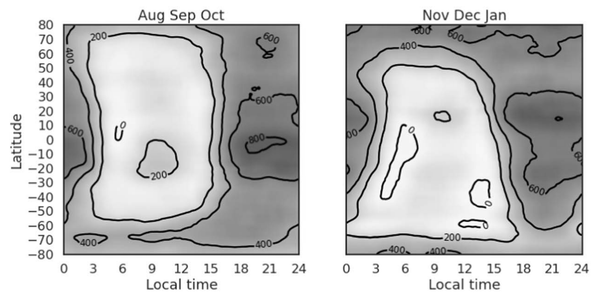
This post considers how much solar electricity is lost due to man-made contrail-cirrus clouds.

This post considers how much solar electricity is lost due to man-made contrail-cirrus clouds.
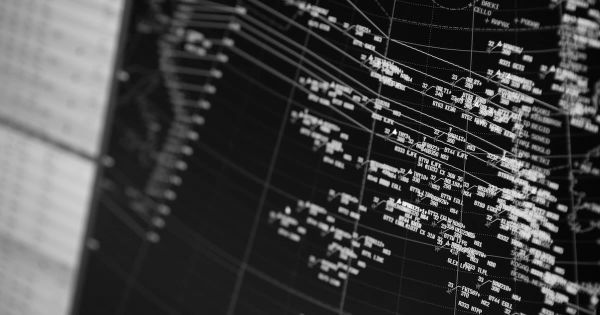
This post introduces the world's first oceanic airspace-scale contrail avoidance trial, Operation Blue Skies, starting this winter in the North Atlantic.
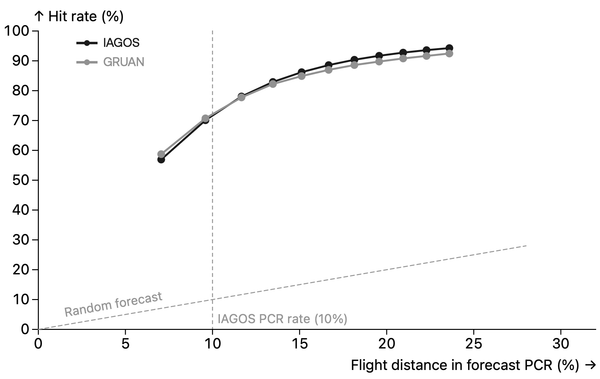
This post describes a new framework to evaluate contrail forecasts against real-world observations.
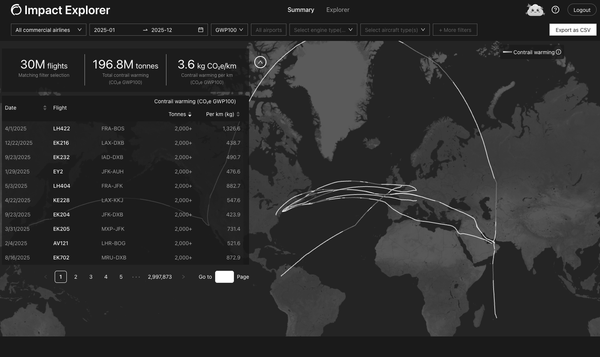
This post describes our new interactive tool for quantifying and visualizing the climate impact of contrails.
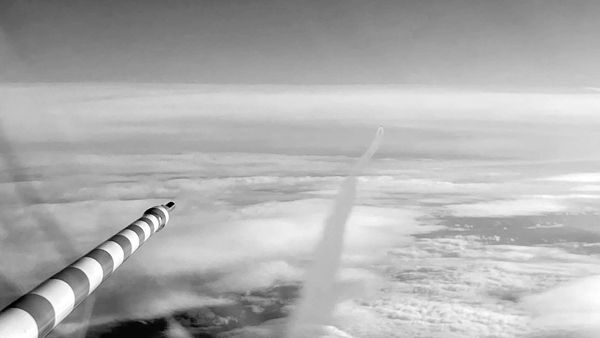
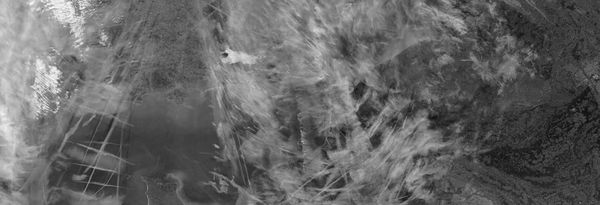
This post describes the ways we can observe and measure contrails to evaluate contrail forecast models and improve our understanding of contrail effects.
This post describes new contrail classifications in the Travel Impact Model (implemented by Google Flights) that help travelers identify flights with the lowest expected contrail impacts.
This post presents an order-of-magnitude estimate for the long-term cost-benefit of navigational contrail avoidance. At the end, we've built an interactive tool to explore the sensitivity of abatement cost to assumptions.
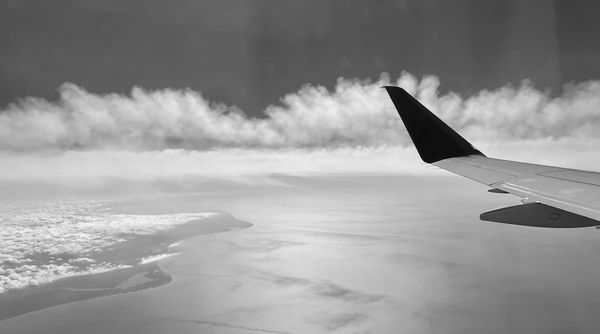
This post is the first in a series breaking down the structure of persistent contrail regions and how these shapes inform navigational avoidance strategies. In this first post, we look at the thickness of contrail regions.
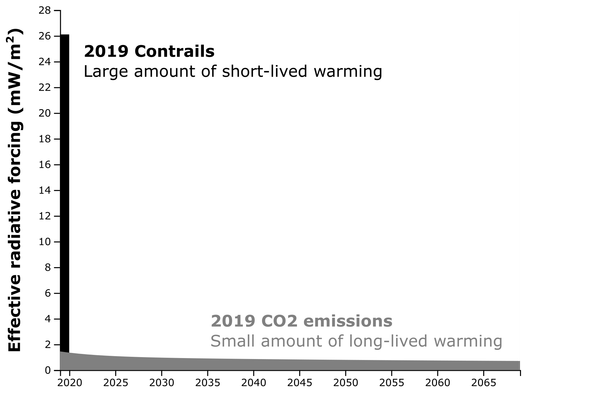
This technical primer highlights key differences between contrail and CO2 warming and provides guidance on ways to make meaningful comparisons of the two.

As we outlined in our first notebook post, contrail management presents a potentially huge climate opportunity. The scientific journey leading us here has been fascinating – but it’s far from over. This post offers a brief retrospective for some of our proudest accomplishments on the journey so far, and a
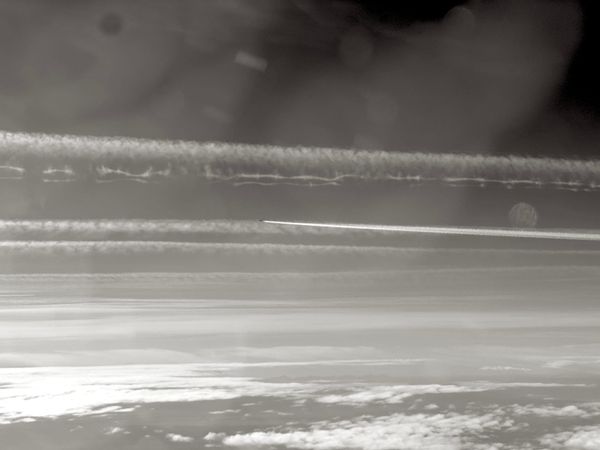
Welcome to Contrails.org. We’re excited to share our mission and start documenting progress in this new Contrails.org Notebook. In recent years, science has given us a much clearer picture of the major role that contrails – those thin, wispy clouds planes sometimes leave behind – can play in contributing